
Native Plant Guide
Twelve Hill Country plants we use in nearly every garden.
There are about 5,000 native plant species in Texas. We use a working palette of roughly 120. These twelve are the workhorses — the species we keep coming back to because they are tough, beautiful, and genuinely belong here.
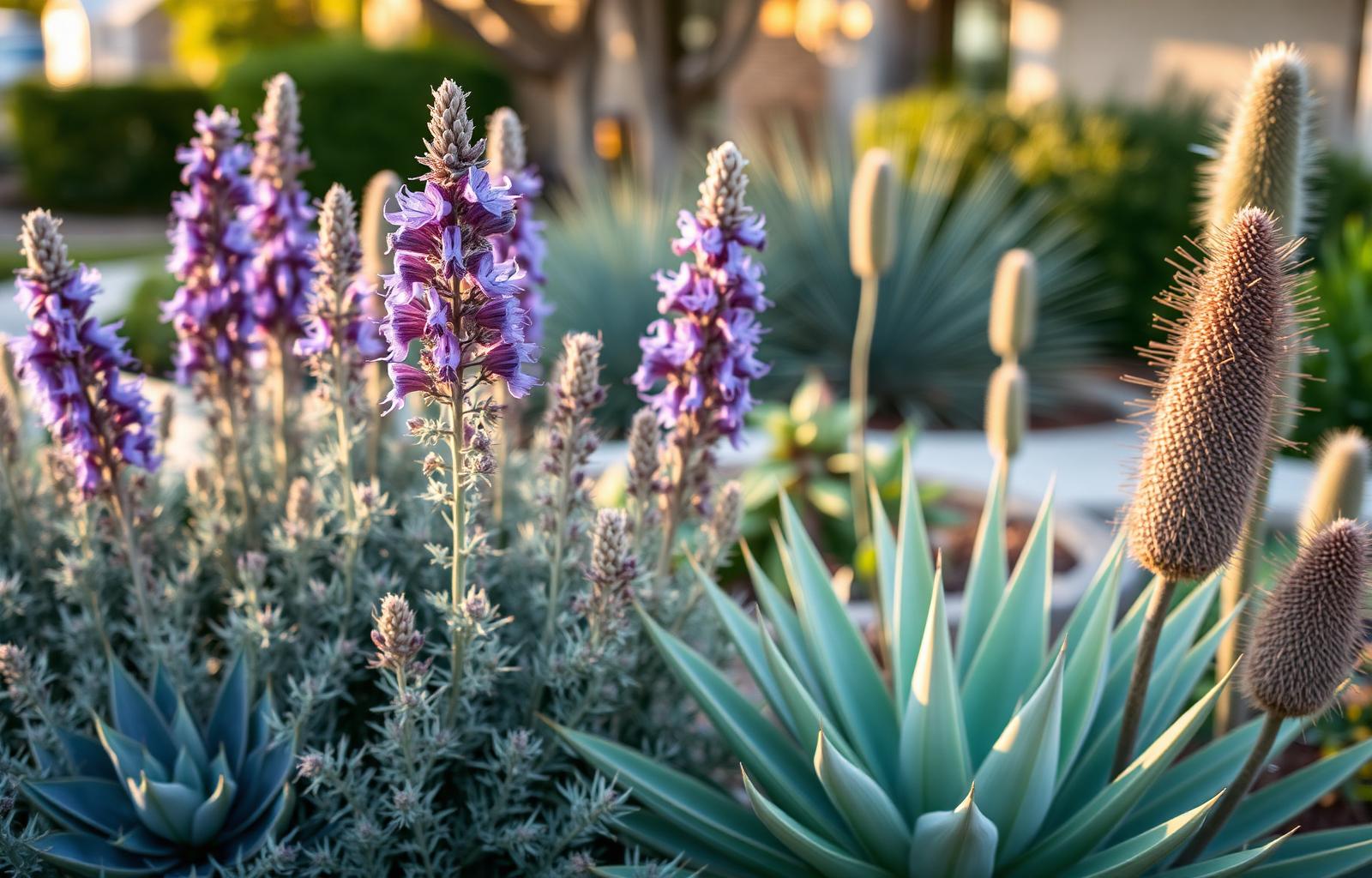
Texas Mountain Laurel
Sophora secundiflora
Evergreen large shrub or small tree. Fragrant purple grape-scented flowers in March. Tolerates caliche, full sun, total drought once established. Slow-growing — worth the wait.
Cedar Sage
Salvia roemeriana
Shade-loving Texas native salvia with crimson tubular flowers from April through October. The single best perennial we know for hummingbirds in dry shade under live oaks.
Mexican Feathergrass
Nassella tenuissima
Fine-textured, knee-high bunchgrass that moves beautifully in the wind. Re-seeds politely. Pairs with almost anything. Cut back hard in February.
Blackfoot Daisy
Melampodium leucanthum
Low mounding white-flowering perennial that blooms from March through November. Prefers terrible soil and full sun. Lives 4–6 years before needing replacement.
Flame Acanthus
Anisacanthus quadrifidus var. wrightii
Three-foot deciduous shrub with orange-red trumpet flowers from June through October. Hummingbird magnet. Thrives in heat and reflected light against limestone.
Lindheimer's Muhly
Muhlenbergia lindheimeri
Tall (4 ft) silvery-green bunchgrass with cream plumes in October. Anchors a planting beautifully in fall. Long-lived. One of the great native grasses of Central Texas.
Gulf Muhly
Muhlenbergia capillaris
Lower (2–3 ft) cousin of Lindheimer's, with a dramatic pink-purple plume in October that reads from across the yard. Best in drifts of seven or more.
Cherry Sage
Salvia greggii
Evergreen 2–3 ft shrub blooming nearly year-round in shades of red, pink, coral, and white. Tough as nails. Cut back by a third in early March.
Texas Sage
Leucophyllum frutescens
Silver-leaved evergreen shrub that bursts into purple bloom after summer rain (hence the nickname 'barometer bush'). Leave it alone — do not shear.
Possumhaw Holly
Ilex decidua
Deciduous understory tree that drops its leaves in November to reveal stems coated in scarlet berries that hold through January. Gorgeous in winter.
Twistleaf Yucca
Yucca rupicola
Low evergreen rosette with curling blue-green leaves. Sends up a five-foot bloom spike of cream flowers in May. Excellent architectural anchor for sunny beds.
Inland Sea Oats
Chasmanthium latifolium
The grass for dry shade. Bamboo-like foliage with seed heads that look like little oat sprays from August through frost. Cut back in February.
A note on "drought-tolerant"
The phrase "drought-tolerant" gets used loosely. Even our most tolerant natives need consistent water for the first full growing season — usually 12 months — while their root systems develop. After that, most will survive on rainfall alone in an average year, and need supplemental water only during extreme summer heat or extended drought.
The single most common reason a native garden fails in Central Texas is that it was assumed to be self-sufficient on day one. Plan for the first year of watering, and almost anything from this list will reward you for a decade.